Sonic style
$26,393
soulnote.com (factory)
supremeacousticsystems.com (US Distributor)
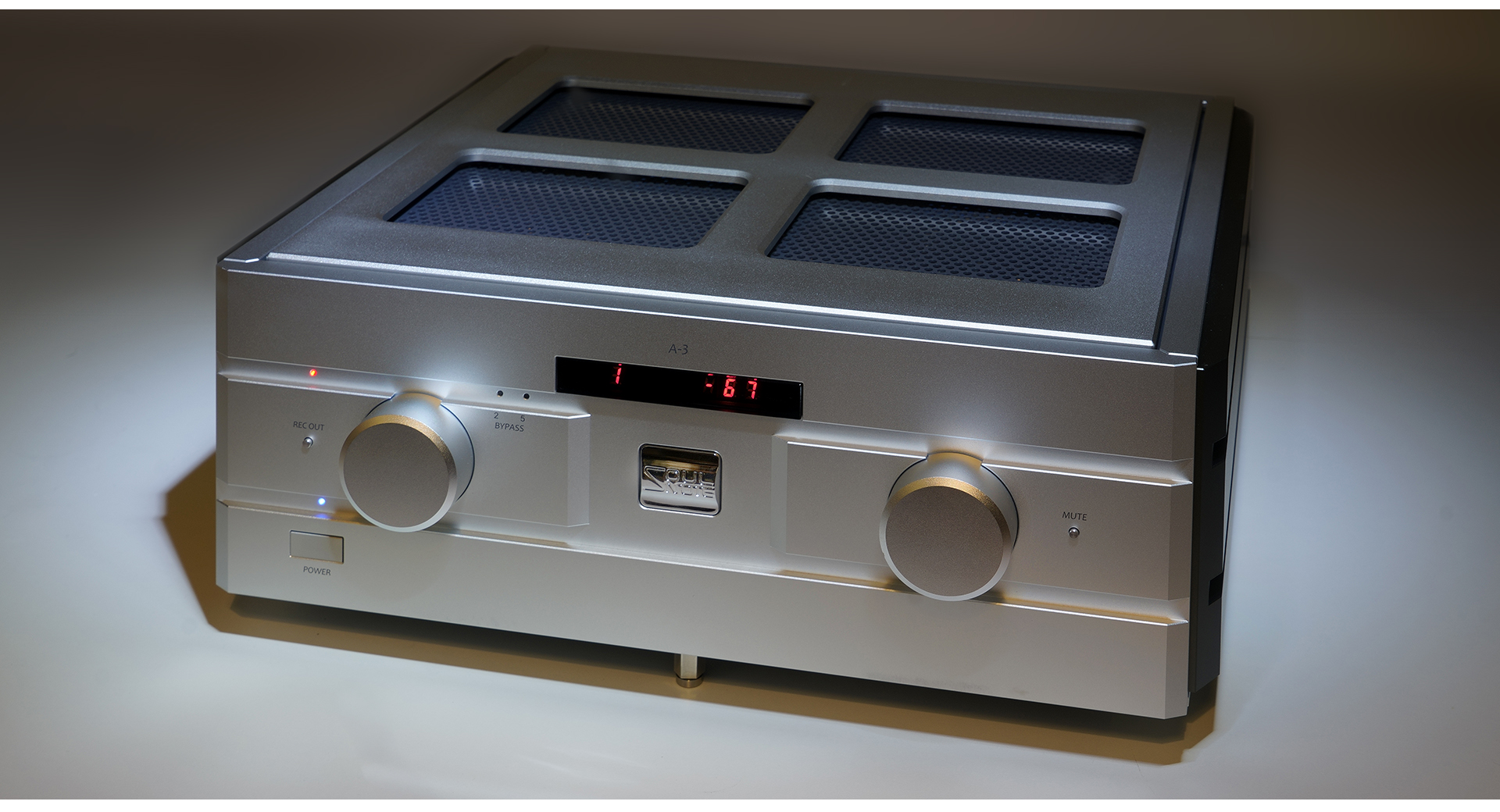
Starting the A-3 listening sessions with the recently reviewed YG Summit speakers proves to be more than a little bit of audio heaven. This amplifier is particularly well suited to the Summits, which are voiced a touch warmer than the equivalently priced YG Carmel 3.
Listening to Rickie Lee Jones’ debut, S/T album, and Madeline Peyroux’s ” Careless Whisper immediately reveals the delicate, yet powerful and controlled nature of this amplifier. When listening to the Summits with tubes, it all proves to be a bit too much of a good thing. The acoustic bass at the beginning of Jones’ “Easy Money” becomes muddled, disrupting the musical pace. A similar thing happens with the oompa-loompa bass line in the title track of Careless Whisper. Yet, swapping the A-3 in the system corrects all the problems. The pace returns, and the layers of detail in both selections return as they should. Sometimes, the control provided by a great solid-state amplifier is what’s required to get the job done.
Going way back to the 60s and listening to the Mamas & The Papas again demonstrates the pace that the A-3 delivers. The ping-pong stereo effects and heavily layered harmonies in “I Saw Her Again,” and “Monday, Monday” come to life in a realistic way, showing off the meticulous arrangements involved in these classic tracks.

Just when you thought I was getting soft, it’s time for some Van Halen. The recent 1-step MoFi versions of the first four Van Halen albums are hard rock masterpieces, restoring the dynamics, detail, and low-frequency information that should have been there all along. Turning “Atomic Punk” up as loud as it can go reveals the end of the A-3’s power delivery, but right up until that point, it stays composed. Similarly, when listening to “Crazy Nights” from Loudness’ Thunder in the East album, I can run the A-3 out of juice, albeit at a very illegal level. Major metal heads, with inefficient speakers, may want some Soul Note separates and go for the M3 monos! For everyone else, the A-3 will be incredible.
There are many very capable integrated amplifiers in the $25,000 range from storied manufacturers. If you are someone wanting premium separate component performance, without having a rack full of gear – this is the way to go. Not only does a premium integrated save space, it saves money and agony. Money , because it’s one less power cord and set of interconnects to purchase. That alone might run you another $500 – $5,000 (or more), depending on how obsessed you are. Agony, because you know the power amplifier will be 100% compatible with the preamplifier. One less bitch I gotta worry about. Well, you will have to decide on silver or black…
But seriously, this is a great integrated with an incredible pedigree. Founded in 2004 by former Marantz Japan director Norinaga Nakazawa, SN did not get to America until 2022. If you are a fan of the best Japanese brands, you will feel right at home with Soul Note’s elegance, even before you power it up.
You’ll also notice, while unboxing this nearly 70-pound solid-state masterpiece, that it feels a little wiggly. It’s not flashbacks. Thanks to a three-point lateral sliding structure, the main chassis and components float freely, eliminating most of the vibration that would be present in a single-chassis version. A number of other manufacturers (Naim in particular) have done this to some extent, also enjoying great vibration immunity. A quick peek at the spec sheet reveals just how quiet the A-3 is.
We do not perform measurements, but Soul Note claims a s/n ratio of 110dB. When using it with the Klipschorn AK7s (103 dB/1 watt), there was absolutely no noise emanating from the tweeter horn.
This 120-watt per channel (8-ohm) amplifier is incredibly robust and drives every speaker we pair it with, from the YG Carmel 3s and YG Summits, to the Clarisys Auditorium Plus ribbons, and the power-hungry Magnepans. Nothing presents an issue for the A-3. You can incorporate this one into your system with ease.
Tech/background
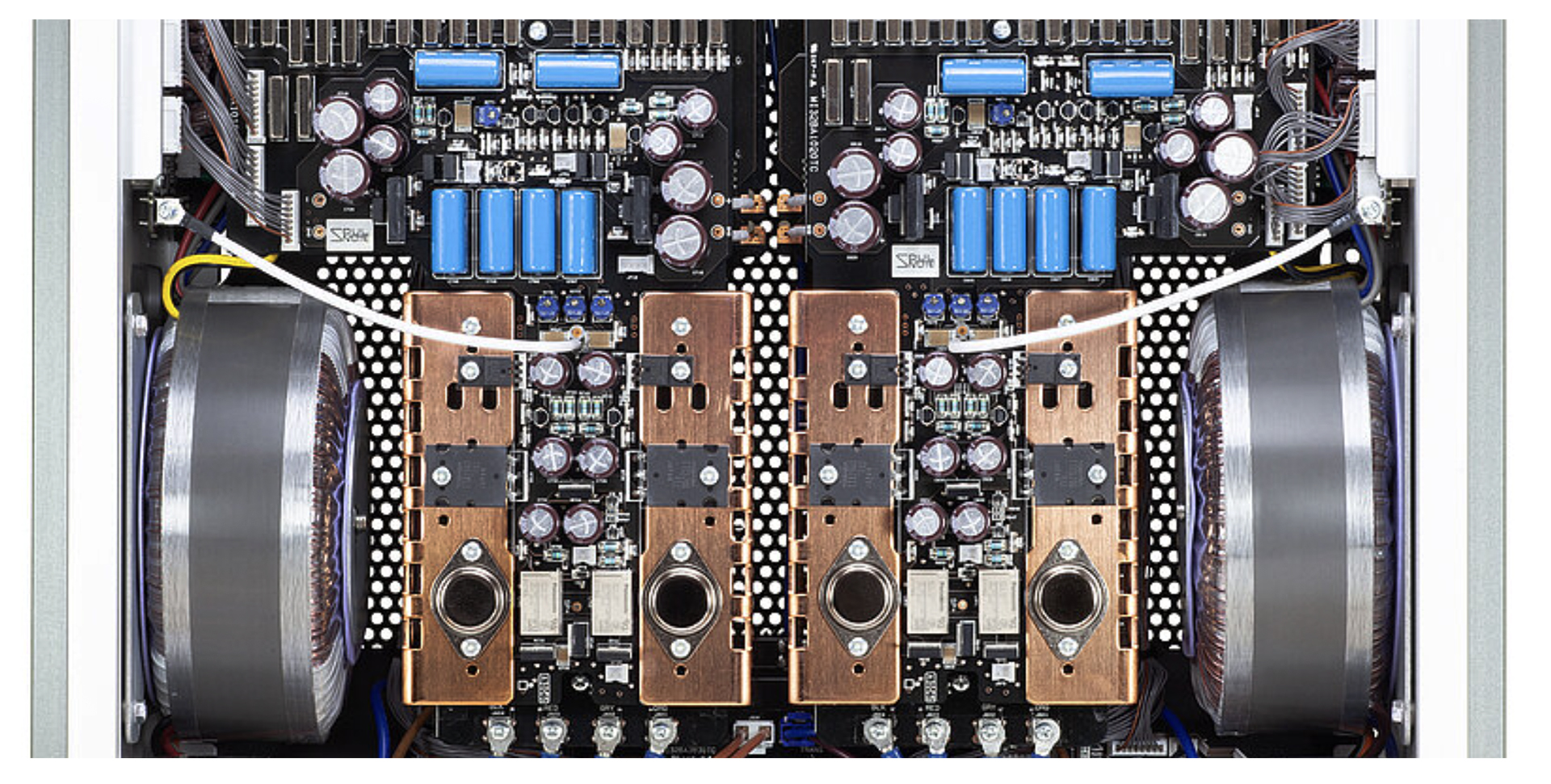
At first glance, you might be somewhat put off by $25k for an integrated, but this is essentially a Soul Note P-3 preamplifier and a pair of M-3 monoblock amplifiers inside one big box. The word for the Soul Note A-3 is refinement. While I didn’t even think about trying to take it apart to take photos, you can see from their website here that nothing is left to chance, and the level of mechanical and electrical refinement is mega.
https://www.soulnote.audio/soulnote-en/series-3/a-3
Audio’s best products are always highly developed designs. Refinement costs money, and an incredibly high attention to detail is paid to keeping the mono channels separate and noise (both electrical and mechanical) to the absolute minimum. The pictures also reveal the finest components available. Combined with careful execution, it makes for a component that is more than the sum of the parts. While the amplifier is optimized to be an NFB design, even the power supply has no negative feedback. The result is incredible transient response, damping factor, and headroom.
Ins and outs
Around back, you’ll see that the A-3 offers six line-level inputs, with three being balanced XLR and the other three being RCA.XLR input three and RCA input six double as a tape input with a corresponding fixed-level line output. Being a multiple tape deck owner, I used input/output six to excellent effect, making a couple of mix tapes while it was here. As my Otari 5050 reel-to-reel deck only has balanced inputs and outputs, this was a very welcome feature. It’s also worth mentioning that there is a rear panel switch to reverse polarity of the XLRs, in case you have other balanced components having a different “hot” pin.
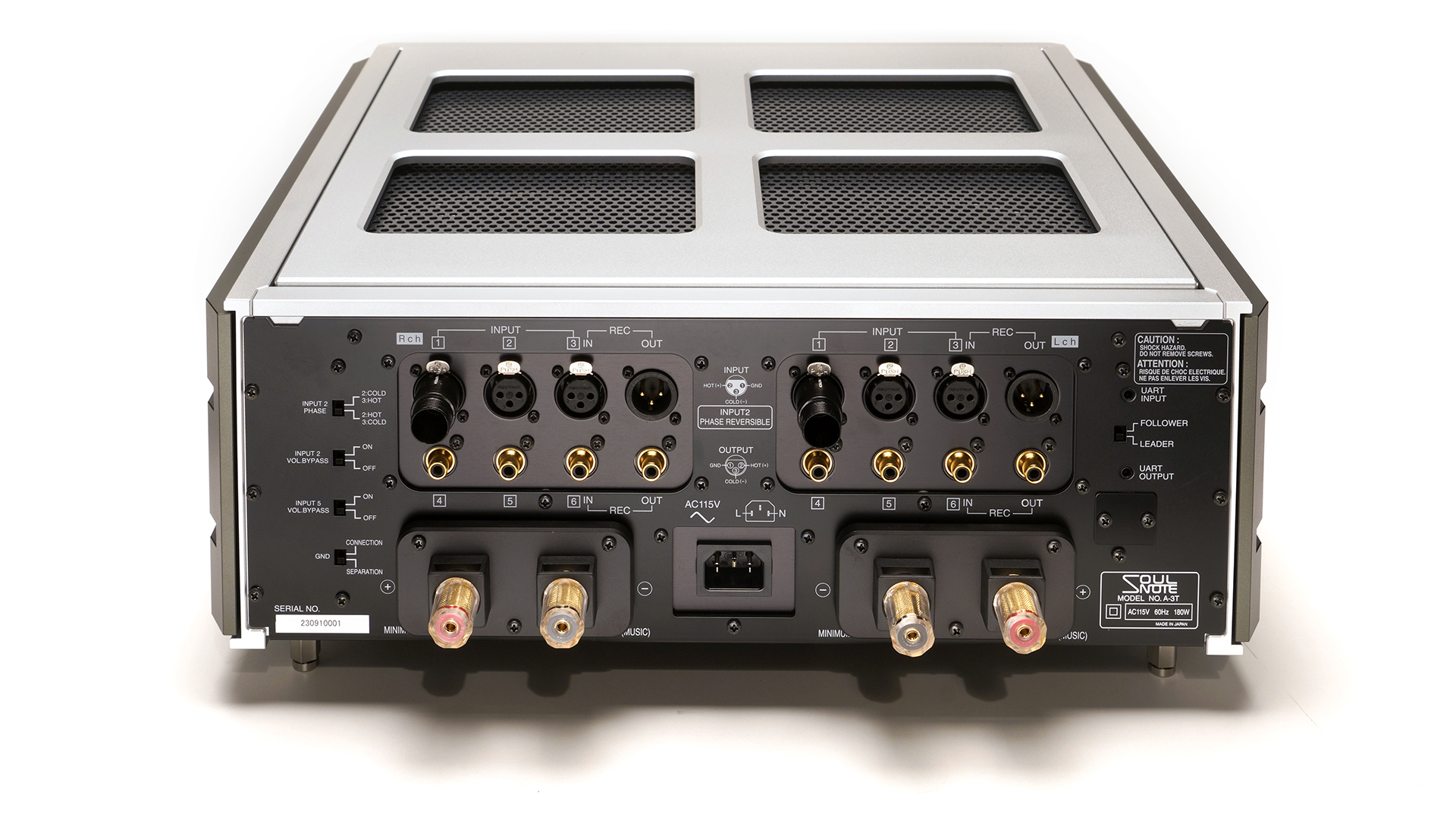 There is only a single pair of speaker outputs – also wiggly like the chassis, so plug in and out with care. If you use REL subwoofers that connect at the speaker level, be sure to use one of the screws on the chassis itself. Finally, the A-3 gives you the option to float the ground if you have noise issues with something else in the system.
Mechanically, overall fit and finish are excellent, as we’ve all come to expect with Japanese manufacturers. This is an amplifier you will be proud to have on your rack. All Soul Note gear comes in matte silver or black finish.
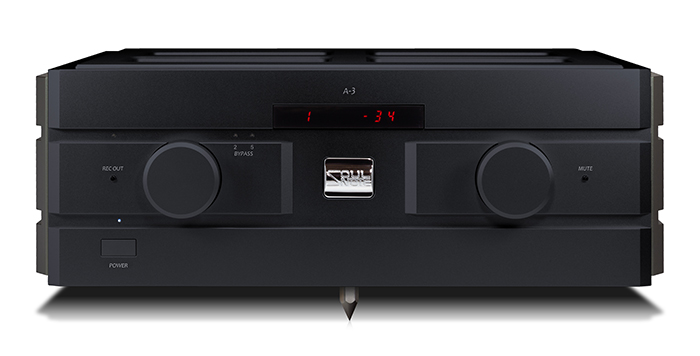 In their efforts to minimize vibration, the A-3 features sharp spiked feet, and I mean sharp. Make sure to use the enclosed pucks when mounting on a rack, shelf, or cabinet.
Quick comparisons
Keep in mind that while this is a single-purpose component with no DAC or phonostage built in, the A-3 is really at the bottom of the price point when compared to similar offerings from CH Precision, Simaudio, Boulder, Burmester, and a few others. In addition to keeping up sonically with its competitors, the Soul Note A-3 delivers a level of musical excellence that is equally, if not more thrilling.
An AB design, the A-3 takes advantage of a single output stage to keep things simple. After many long listening sessions with digital (the dCS Varese) and analog (SME20 w/Hana Umami Red and Bergmann Thor w/Lyra Helikon SL, through Pass Labs XP-17), this amplifier emerges as having precious little voice. For many, that will be an excellent thing, because you can fine-tune your system with everything else, and should your taste in speakers or phono cartridges change, you don’t have to buy a new amp.
Where my reference Pass amplifiers are a click or two in the warm direction, the A-3 is much closer to a non-embellishing sound like Boulder. Just so you know what else I’m comparing to, the Simaudio amplifiers sound a little sterile and etched in comparison, and the Luxman class A amplifiers are a bit warmer sounding than my Pass gear. Make sense? This is the part of the process that can always be tough.
What the A-3 excels at is control, detail retrieval, and the ability to create a large soundfield in all three directions. Listening to well-worn reference tracks from numerous artists shows the A-3 at the top of the pack when it comes to extracting the maximum amount of musical detail and spatial cues. This is what sets it apart from others and makes it worth the asking price. The more you listen to the A-3 and listen into it, you’ll see what I mean.
More listening
The more time spent in the listening chair, the more the Soul Note A-3 fades off into nothingness. Its dynamic delivery is effortless, the sound stage massive, and the tonality as neutral as it can be without coloration. And, it is extremely quiet as well. It succeeds brilliantly on every level. It’s so easy to be overwhelmed by FOMO when auditioning components these days; it’s refreshing to just use something that you can just dig. We are looking forward to sampling more Soul Note components in the years to come. –Jeff Dorgay
Peripherals
Analog Source SME20 w/Hana Umami Red, Bergmann Thor w/Lyra Helikon SL
Phono Stage Pass Labs XP-27, MoFi Studio Phono Amplifier
Digital Source dCS Varese Stack
Speakers Clarisys Audiorium Plus(w/six pack of REL Carbon Specials), YG Carmel 3, Klipschorn AK7 (w/six pack of REL H/T1510s)
Cable Cardas Clear