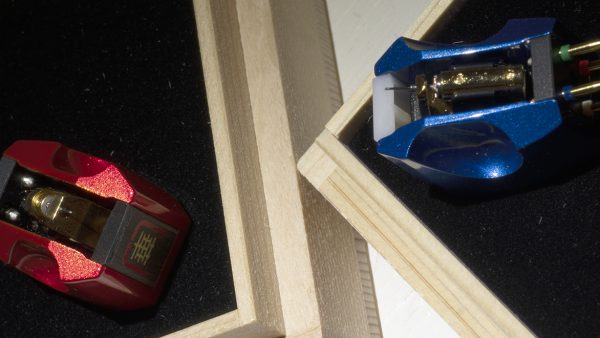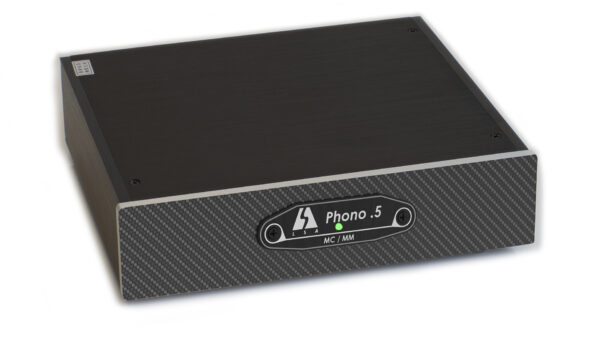
Listening to George Clinton’s “Quickie” through the mighty Klipschorn/REL six-pack combination with DS Audio’s latest entry-level optical cartridge instantly reveals what makes the Soul Note E-2 ver.2 so special. The way the bass line is locked in, the acoustic and electronic instruments all feel right, combined with a big, big soundstage, has this five-dollar pressing sound way better than it has a right to. As I would soon discover, every record played on this solid-state phono preamplifier would deliver this same result and experience.
This massive, 50-pound phono stage offers four inputs, one of which is specifically for optical cartridges. Moving forward, we will refer to it simply as the E-2 for brevity’s sake.
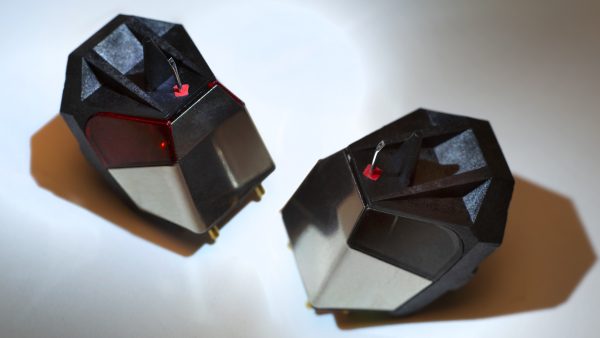
If you aren’t completely familiar with the DS-Audio cartridges, their optical cartridges have not only become quite the rage lately, but they also require a separate phono “equalizer” (to power the cartridge and meet different electrical requirements) than a standard MM or MC cartridge. We can all get out on the internet and argue what’s best, but if you’d like to add a DS cartridge to your setup, the E-2 from Soul Note is fab.
If you aren’t familiar with Soul Note, they are somewhat new to the US market, imported by Supreme Acoustic Systems in Las Vegas, Nevada, but were founded in Japan in 2004. The company was founded by former Marantz Japan employees and promotes the concept of “dynamic performance.” This places greater emphasis on time-domain performance than on static measurements alone. It’s not terribly scientific of me to describe it this way, but music reproduced through Soul Note components always has a certain tonal correctness and liveliness that I always find extremely pleasing. I know a guy in Northern California who follows the same ethos.
The main attraction
Like all the other Soul Note products we’ve had our hands on, the A-2 is robustly built. There’s always something special about their attention to every detail that makes their products top in class. Their Series 2 components all share a similar design aesthetic and tremendous value in their range.
However, the most exciting thing about the E-2 is its level of adjustability. While a few phono preamplifiers in the $10k price range offer RIAA and DECCA EQ choices, thanks to individual adjustments for Equalizer frequency roll-off/kHz (1,59 / 2,12 (RIAA) / 2,59 / 3,18 / 6,89 / FLAT), Equalizer frequency turnover Hz (250 / 390 / 500 (RIAA) / 630) and Equalizer frequency low limit Hz (50 (RIAA) / 71 / 100 / 125 / 150 / FLAT), there are 144 possible combinations.
If you are new to vinyl or have a collection dating back to the late 1960s, most of this won’t matter to you. Most of your records have been created with the RIAA EQ curve. If you have older, more obscure records, this will be a godsend, because now you can get them to playback as they were intended. Mono and invert switches are also included, along with MC load resistance settings of 3 Ω / 10 Ω / 30 Ω / 100 Ω, and MM load capacitance settings of 100 pF / 200 pF / 350 pF. MM loading is set to 47k. Oddly, considering all the trouble the Soul Note team has gone through to provide so much adjustability elsewhere, it’s surprising they didn’t give a few extra adjustments here. This is hardly a deal breaker by any stretch of the imagination, just a curiosity.
As I do not have any obscure classical records or terribly old pressings, all of my listening was performed with the standard RIAA settings.
Soul Note has incorporated quite a bit of the same circuitry from their flagship E-3 here in the E-2, including the power supply and the actual equalizer elements. It is a fully differential circuit throughout, and you can read the full details here at the SoulNote site:
https://www.soulnote.audio/soulnote-en/series-2/e-2-ver2
Did we mention FOUR inputs?
With so many vinyl enthusiasts embracing multiple turntable/tonearm/cartridge setups, the E-2’s four inputs make it an incredible proposition for growing your system, even if you only have a single table right now. The larger and more diverse your record collection, the more a second, third, or fourth setup maximizes the experience. Multiple tables make it easy to have more than one sonic flavor, which better suits different recordings.

At $9,500, the E-2 isn’t stratospherically priced, but it may be a little on the high side if you only have one table. However, if you have two or more, it becomes one of the best values going, and that’s really who this product is aimed towards. You could easily spend more than the E-2’s asking price on four power cords and four sets of interconnect cables. Four separate phono preamplifiers might also require another rack, too.
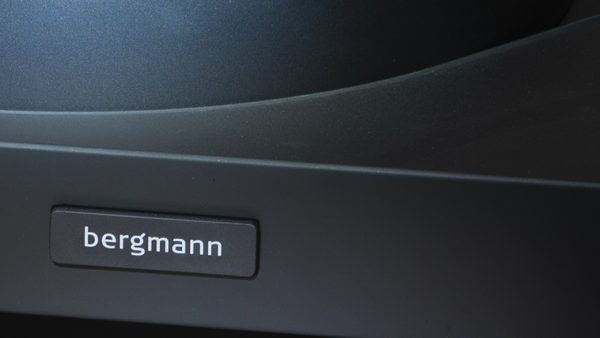
During the course of this review, a new Technics 1210G was used for the DS Audio DS E3 optical cartridge, a Bergmann Modi with an Ana Mighty Sound modded Lyra Helikon SL MC cartridge, an SME 20 table with the Hana Umami Red MC, and a vintage Technics SL1100 with a 3009 tonearm and Shure V-15 mk.III MM cartridge. As a turntable enthusiast, it’s incredible to connect them all to one source! This is vinyl heaven.
If you have 2-4 tables, the price of the E-2 becomes easier to justify – especially in terms of clutter, placement, and the lack of cables needed to keep the whole setup engaged. Two of the MM/MC inputs are RCA/unbalanced, and the third is an XLR balanced MC-only input. If you happen to have four mega tables and want to step up the new, to be released any day version of the Soul Note E-3 will also have multiple inputs and optical. (In the past, the E-3 was optical only)
Setup
Yep, this one is heavy. As you can see from the supplied photo, this is not a big, empty box with a high price tag. The E-2 looks like a power amplifier on the inside, with a massive 400 VA power transformer. Because Soul Note builds their gear in a way that suspends the innermost components, I did not want to try and take this one apart to get photos!

Like my other favorite Japanese brands, Soul Note gear is built with care and respect. Everything in the design is purposefully executed, with great thought given to the end user’s needs. In addition to including all the controls on the front panel, clearly labeled to make it easy to use. Around back, all four inputs are specifically marked, and most importantly, they’ve given you a separate grounding lug for each turntable. While this might seem small, if you’ve ever tried to attach multiple tables to a phono stage with only one central grounding lug, you know how cool it is that they have gone the extra step.
Finally, to really show some love for the analog user, the E-2 has a built in degaussing (demag) circuit. Doing this about once or twice a year will keep your MC cartridge at its peak. DO NOT use this for MM cartridges!
The only thing you might have to give a little extra thought to, with three or four turntables, is how to locate them all in proximity, so their tonearm cables all reach the E-2! This will be your biggest challenge!
More listening
Having the flexibility to match the album’s type and overall sonic signature to a specific table/cartridge combination truly broadens the analog experience. Though the individual cartridges at my disposal all sound unique, the E-2’s overall sound is quiet, dynamic, resolving, and tonally accurate.
The all-solid-state design delivers such a low noise floor that it almost feels like you are listening to digital playback. (at least in terms of the quietness) Like the other Soul Note components we’ve auditioned, the neutrality offered here will not embellish the presentation, nor will it cut anything short. And again, with four inputs, you can fine-tune the ultimate tonality by the cartridges you choose. This neutrality will most likely keep the E-2 as an anchor for your system much longer than a component that is voiced one way or the other. This further underscores the extreme value the E-2 delivers, and I suspect that that, for all but the most fanatical audio enthusiasts who live for constant change and exploration, this phono stage could easily be the last one you buy.
The beginning of this review mentions a certain tonal correctness and flow of Soul Note components. This is something that truly reveals the nature of analog recordings, especially, making the E-2 a component you can listen to for hours on end. The E-2 will definitely have you getting up to play “just one more record,” and before you know it, the sun might be coming up. Time for a PTO day, right?

What makes the E-2 so special is the amount of balance it delivers. All aspects of musical reproduction carry equal weight, and it is so unobtrusive that at first listen, you might miss its greatness. Yet, the more records you play it becomes clear that the bottom registers are weighty and extended, and the high frequencies equally extended without a hint of harshness, anywhere. Nothing is exaggerated.
Violins and pianos sound correct, and instruments retain not only their proper size but also their spatial perspective. Imaging is gently precise, with excellent placement, always drawing you in further and further. The finest recordings in your collection will envelop you in the sonic landscape, yet the worst ones will reveal new tidbits to keep you interested.
It’s like an F1 car, set up to perfection. Not only are braking, handling, and acceleration all maximized to work together to the ultimate effect, but the way these things are accomplished has a wide range of feel and feedback. The E-2 is more than the sum of its parts indeed. No matter what kind of music you enjoy, or the wider your range of musical taste, the more you will be fulfilled by this phono stage. At that point, it truly does become a bargain.
The eternal argument
Some of you might argue that one mega setup would be the best way to go, but I submit that I would rather have four $5-$25k turntables than one $20-$100k table, because records all sound so different. You might want to collect 78s and dedicate one table to that. Once you hear older, true mono pressings, having a table specifically set up with a great mono cartridge will deliver an amazing experience. I like having a separate table set up with a dynamic MM cartridge for playing my 12” 45 r.p.m. records. And, there are other choices; the sky is the limit. The E-2 goes a long way to help you achieve that goal.
In that respect, the Soul Note E-2/version 2 checks all the boxes for deserving an Exceptional Value Award: it is built to an extremely high standard, sounds fantastic, looks great, and delivers a mega user experience. Highly recommended and a true favorite.

$9,500
(US DISTRIBUTOR) Supremeacousticsystems.com
(Factory) Soulnote.audio
Peripherals
Preamplifier Pass Labs XS Pre
Power Amplifier Pass Labs XS 300 Monoblocks
Digital Source dCS Varese, w/transport
Turntables SME 20, Technics SL-1100, Technics SL-1210G, Bergmann Modi, Thorens TD-124DD
Cartridges Hana Umami Red, Ana Mighty Sound modded Lyra Helikon SL, Ana Mighty Sound modded Denon DL-103r, Stock Denon DL-103r, Clearaudio Charisma 2.1, Ortofon SPU/TD-124, Shure V15III w/Jico Stylus
Speakers Clarisys Auditorium Plus w/six pack of REL Carbon Special
Cable Cardas Clear and Clear Beyond