Sometime around 12 years old, my dad took me to visit my older cousin who, unbeknownst to me, was an audiophile. Now, this shouldn’t come as a huge surprise as I’m pretty confident, I didn’t even know what the definition of “audiophile” was at that age and, 40 odd years later, I still may not. Off to the right in the living room were the biggest speakers I’d ever seen. Seriously, they were bigger than me! I had to hear them, so I begged him to play something. Being a rock n’ roll kid (that’s what happens when you start playing drums at 6) I was hoping he would play something that would blow my hair back like the Maxell guy. Unfortunately, he grabbed a record, dropped the needle on his Denon DP57L and the soft tones of a piano cascaded down the register. What the heck? This isn’t what I wanted…
Woah! Suddenly I’m surrounded by the pings of cymbal bells floating around while synth chords vibrate the walls as the unmistakable groove of Jeff Porcaro drops in. Now, my hair may have stayed firmly in place, but my mind was certainly blown! Klipschorns at full chat will do that to you. This was around 1980 and I’ve been addicted to high performance sound ever since.
Around the same time, Bill Conrad and Lew Johson, two economists and music lovers, became increasingly dissatisfied with the new solid-state equipment everyone else was building. Everything just wasn’t very musical. So they got together to create a high-performance audio company centered around tubes, clean topographies, and little to no feedback. The sound was to be warm, lush, and above all highly musical. What emerged has grown to become legendary, and conrad-johnson Design was born.
If you think “legendary” is too strong a term, try thinking of another independent audio company that’s been around for nearly 50 years. Not easy, is it? Most have merged with others or been swallowed whole by giant multinationals. Conrad-johnson remains fiercely independent while staying true to their founding guidelines of producing highly musical components. Over the decades, I’ve always admired CJ, their luxurious gold faceplates and glowing tubes drawing me in like a moth to a flame. That said, I haven’t always found the right c-j piece for my system. My last try was with a borrowed EV1 that was a little too warm for my system. The experience once again highlighted the undervalued aspect of synergy in the audio hobby.
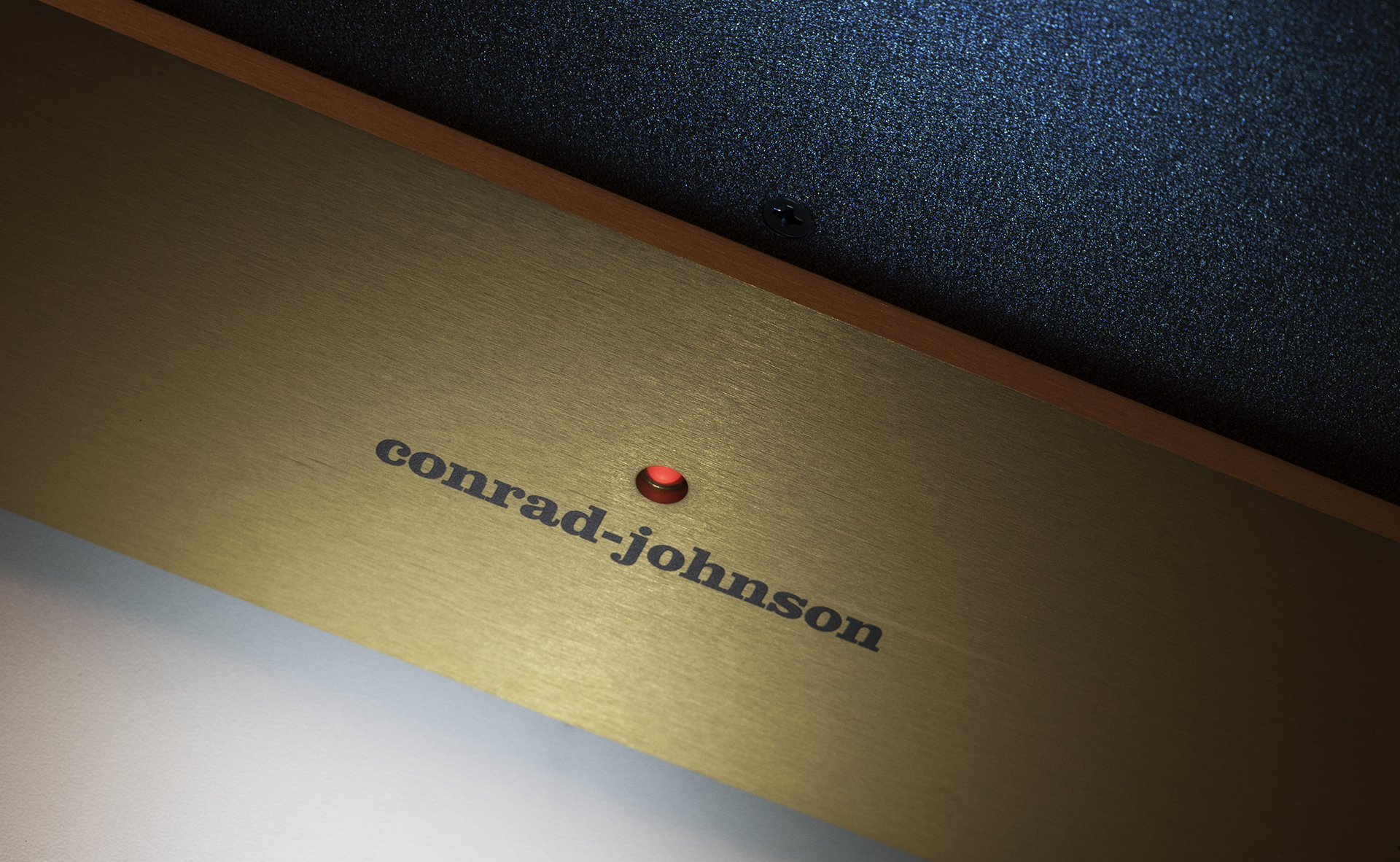
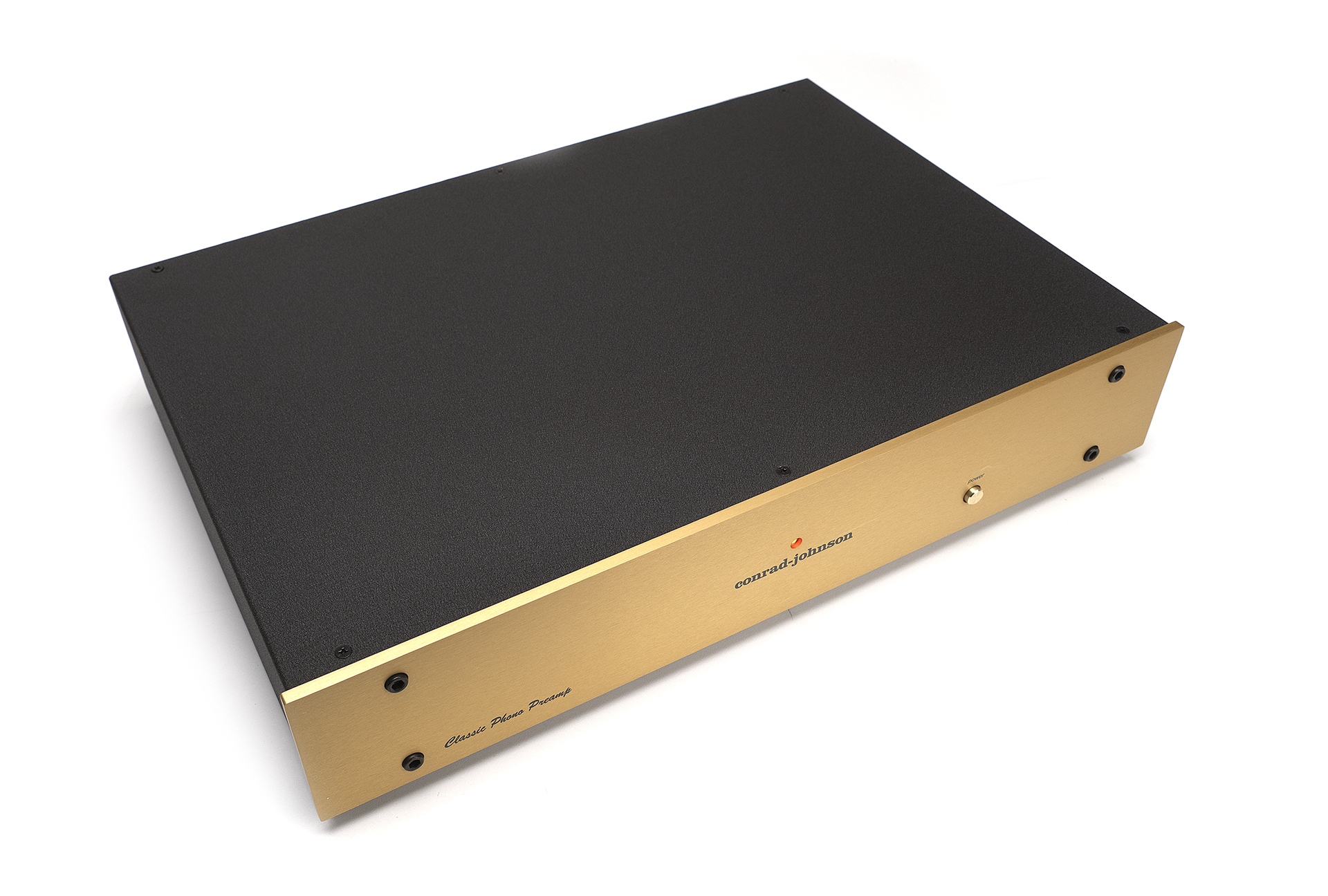
Fast forward to the subject of this review, the latest Conrad Johnson Classic Phono SE, and let me get this out of the way right now; this CJ is nothing like the one from before! Before we dive into why, a little background on this unit is in order.
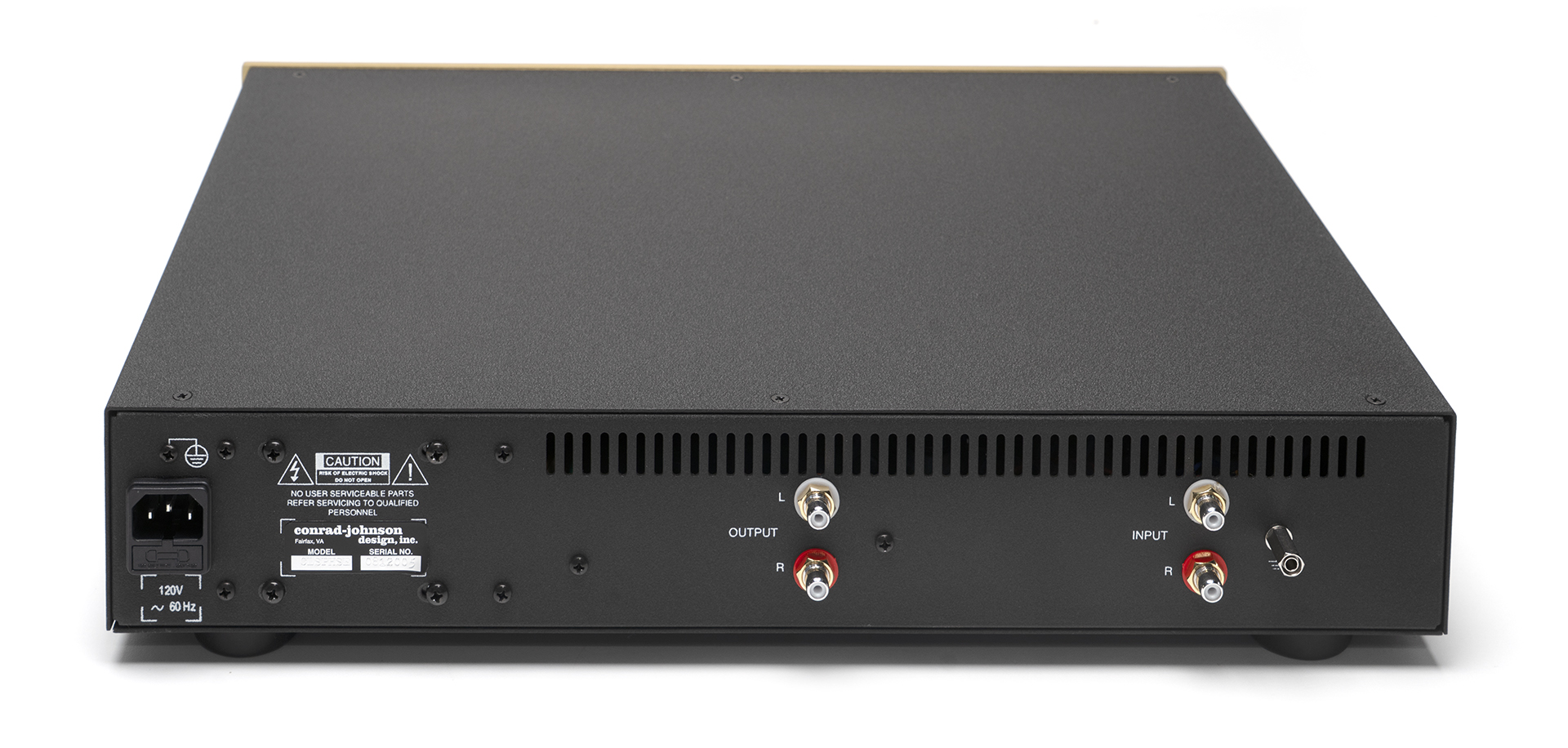
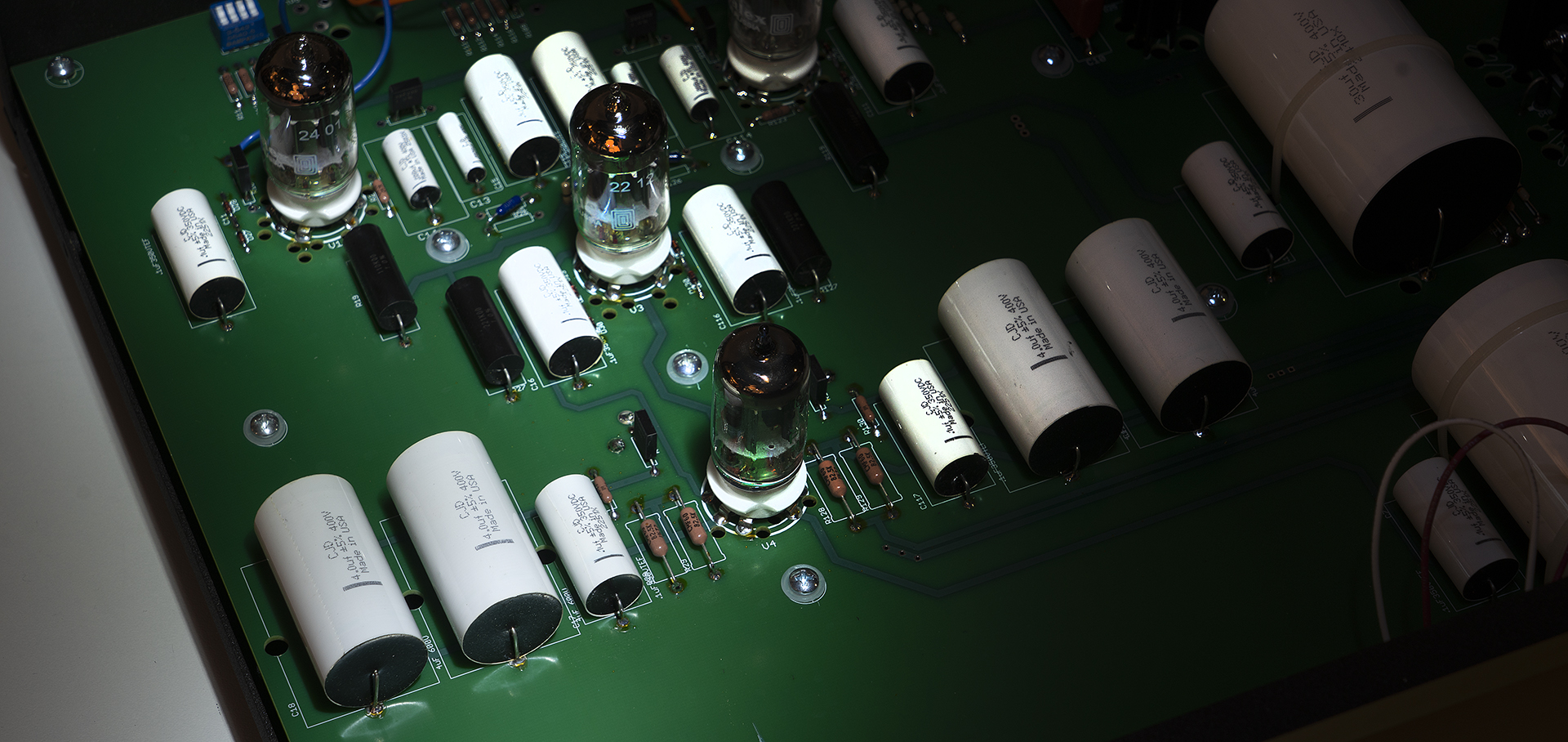
The Classic comes in two flavors to fit your system, Low Gain provides 40db while High Gain brings 53db, the latter augmented by an additional 12AX7 tube in a second gain stage. Both share a zero-loop feedback circuit, single ended triode gain stages, and passive RIAA EQ. If there is a way to differentiate the LG from the HG through any markings on the casework, it remains elusive to me. The only way to tell short of plugging it in and letting ‘er rip is to unscrew the top and take a peek, which is exactly what I did. With only 6 small countersunk screws on top and two more on either side, this is not an involved process, taking but a minute. Once removed, I was greeted with a supremely clean layout with dip switches to adjust loading, three 12AX7 tubes delineating this as the High Gain model, one 12AU7, a large power supply, and rows of hospital white CJD caps. Yes, CJ designs and builds their own caps right here in the good ‘ol USA.
They are rightfully proud of them, as well they should be, and this is where the “SE” enters the chat. From CJ’s website:
Twelve of the most critical resistors in the audio circuit are upgraded to laser-trimmed metal foil resistors. Seventeen capacitors are upgraded to CJD Teflon capacitors (chosen for their exceptionally low “memory” characteristic), including intra-stage coupling capacitors and critical “bypass” capacitors.
The cost of upgrading to a SE is $2,000, which is very reasonable considering the parts and labor involved in ensuring the sound quality and longevity meet CJ’s high standards all while retaining their generous 3 year warranty, something you can kiss goodbye should you try inserting the latest flavor of the month in aftermarket caps.
But what does it sound like? It sounds like Conrad Johnson…and yet it doesn’t. In my experience, CJ’s have always leaned towards the warm side, which I like, but this may be the most neutral CJ product I’ve heard so far. It still tips to the warm side carrying that wonderfully musical, non-fatiguing character that makes all day listening sessions a breeze. However, this Classic SE has more sparkle and definition throughout the frequency spectrum than I recall from other CJ gear I’ve heard. What remains, and what I consider CJ’s special sauce, is how microdynamics are rendered that lend a special glow, especially to the midband. It’s something that you have to hear to experience and it can turn non-audiophile pressings into an event.
For example, Toto’s 40 Trips Around The Sun is a compilation album and as such pulls from 4 decades of records, some mastered well, some not so much. There is no reason this should raise the hair on the back of your neck and yet Steve Lukather’s voice on “99” is conveyed with air and effervescence that is impossible to ignore as it floats dead center slightly above the speakers. The imaging is as holographic as I’ve ever heard on my system with the Classic SE throwing a ridiculously deep and wide soundstage, the musicians clearly defined in space. Not to be outshone by his vocals, Lukather is also a highly underrated guitarist and his pyrotechnics are on full display on the instrumental rocker “Jake To the Bone.” Each note flying off his guitar carries a visceral anger as Porcaro’s tightly tuned snare attacks the back beat with full bodied tone and snap. This is a very dynamic piece and the CJ displays its superlative jump factor as it transitions from PP to FFF with the kind of speed not usually heard from tube based gear. Impressive!
John Mayer’s Where the Light Is: Live in Los Angeles by Music On Vinyl followed. Most live albums are poorly recorded, often displaying the limits of the venue while trying to capture the magic. That said, this is one of the better live albums with real dynamics and punch. This 4 record set is broken into 3 sections: Acoustic, John Mayer Trio, and his full band. I’m partial to the first two as Mayer’s brilliant guitar work is better displayed either while solo with an acoustic guitar or while ripping out blues riffs with Pino Palladino and Steve Jordan. Stop This Train” is a beautifully haunting song about navigating life as we age. It’s a delicate piece beautifully rendered with the CJ fully conveying the sadness in Mayer’s voice while his fingers dance on the frets, the chords holding their notes seemingly forever. Most surprising was the foundational bass of his foot tapping out the rhythmic heartbeat of the song and, perhaps not coincidentally, of time ticking itself. It was so deep and forceful I had to look up the video to confirm it was just John Mayer on stage. This is solid, middle of the earth bass we’re talking about here. If you’ve ever worried about tube gear rolling off the highs or being lean in the bass, the Classic SE will force you to reconsider.
To see how it works with some more complex music, I pulled out the longtime standard Ellington Jazz Party In Stereo. Yes, this is one of the Duke’s more overplayed albums, but there’s a reason for that. Masterfully pressed by ORG, tape hiss and all, this is a dynamic powerhouse of big band goodness. The first track, “Malletoba Spank,” is a high energy burner kicking off the record with a vibraphone leading the charge. Orchestra bells soon join the vibes, the Classic SE’s impressive imagery floating the pings in ethereal mist further back and to the left on the soundstage. The rest of the orchestra, particularly the horns, come on like a lightning strike with the CJ exhibiting impressive speed as it releases notes with an effortlessness usually reserved for solid state. There is no hangover, no smearing, just pure blatty tone. Damn, this is fun!
The sultry “Red Garter” immediately follows and throws out an anchor on the tempo as a tenor sax and clarinet perform a smokey, sultry call and response. The Classic SE ably exposes the breaths of the saxophonist as he blows onto the reed, some of his breath transformed into notes, some simply underlying as a wispy suggestion. It’s one of those situations that once you hear it, you’ll never un-hear it and it is mesmerizing.
I decided to end my time with one of my all-time favorite records, The Police‘s Synchronicity. Ranging from the frenetic title track to the sublime “Tea In The Sahara,” this is a great test of flexibility for any piece of gear. The Classic SE handles the multitrack cacophony of Synchronicity II with aplomb, easily delineating each instrument and synth effect. Stewart Copeland’s signature high hat and tightly tuned snare stands loud and proud, just as they should be, without the added bloom some equipment can add. The spacey, atmospheric qualities on this track utilizes a lot of reverb and echo, playing right into the CJ’s mastery of microdynamics. The phono preamp’s ability to delicately decay notes deep into a black background abetted Andy Summer’s minimalist guitar work carrying the song thru sustain instead of a multitude of chords. Through it all, Sting’s soulful crooning floats center cut, the magic of tubes lending his voice an almost ethereal quality. I literally caught myself saying “Wow!” multiple times. This was sound transformed into magic.
For nearly 50 years, conrad-johnson Design has consistently been building some of the best sounding gear around, cementing their legacy as an icon in the high end audio realm. A lot has changed over that time, technology has advanced and tastes have evolved. The Classic Phono SE represents the evolution of Conrad Johnson’s long standing ethos for natural, realistic sound. Still as beguilingly musical as ever, they’ve sharpened the focus, added a bit of sparkle, and created a phono stage that legitimately has me questioning how much better can it get? At $9,000 for the SE version, it is not inexpensive. However, in the realm of high-performance end-game gear, one could easily consider this a bit of a bargain. Whether that’s a statement of ultimate performance or a sign of the times is up to you to decide. What I do know is I’m going to warm up the Classic SE, grab a cold one and see if I can get my big JBL horns to blow what’s left of my hair back. Cheers! -Darin Kong
The conrad-johnson Classic Phono SE
$12,000
conradjohnsondesign.com